Widowhood and Decision-Making: How to Feel Confident Again

The Mental Load of Widowhood: Why Every Decision Feels Heavier
Widowhood changes more than our marital status. It not only changes the number of decisions we have to make on a day to day basis. It changes how we make those decisions.
When we were married, we usually had someone to think through life with. We bounced ideas off each other, weighed options together, and shared the weight of hard choices — often without even realizing it, over dinner, in passing conversation, in the quiet moments before sleep. That sharing was so ordinary we rarely noticed it was happening.
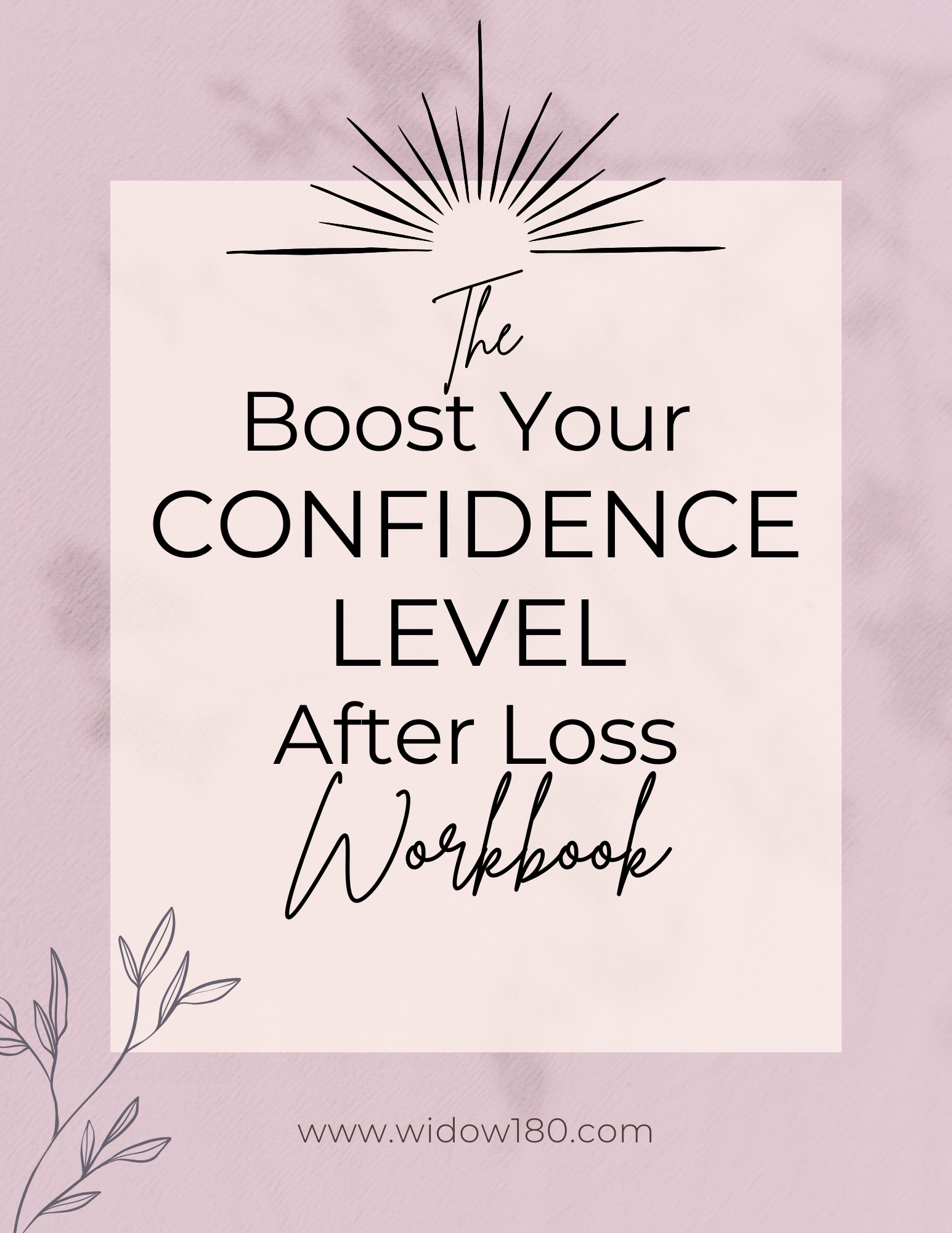
Related: Get the Boost Your Confidence Level After Loss Workbook HERE
Then your spouse dies, and the sounding board went with them.
Suddenly every decision — big or small — lands on us alone. And the weight of those decisions can take a toll. Should I fix the roof or replace it? Is this the right insurance plan? What do I do about this medical question, this legal paper, this budget line I don't understand? What about taxes? Which school should the kids go to? The list seems endless. The decisions themselves haven't necessarily gotten harder. What's changed is that we're making them without the person who used to help carry them.
That's the real weight of widowhood: not just grief, but the sheer mental load of deciding everything by ourselves!
You're a Better Decision-Maker Than Widowhood Wants You to Believe
Here's something I've learned over the past several years and in talking to hundreds of widows and widowers on Widow 180: The Podcast: widowhood has a sneaky way of convincing us we can't be trusted to decide anything well anymore.
We second-guess ourselves. We freeze up over choices we used to make without a thought. We assume that because our husband isn't here to weigh in, our judgment must be weaker than it used to be.
I can look back at my first year as a widow and see that I was paralyzed in fear…fear of making the wrong decisions. I doubted myself in every aspect of life, from finances to lawn care. I didn’t trust other people. I thought everyone was going to take advantage of me in some way. I had my guard up for months, if not years. I didn’t trust people. and most of all, I didn’t trust myself to rely on those people. My fear and self-doubt caused me so much anxiety and stress.
But, life goes on. Decisions have to be made.
I started small. Small choices, that built on each other. Over time, my confidence started to grow. I felt better about the choices I was making. I could look back and see that I was, in fact, doing okay on my own!
Widows often tell me things like, “I can’t make that kind of decision on my own.”
But that's just not true.
If you sit down and actually list the decisions you've made since your husband died (even the small, unglamorous ones!), you'll likely find evidence to the contrary. The bill you figured out how to pay. The repair you arranged. The conversation you had with a doctor, a lawyer, a grandchild who needed you. None of these had to be perfect to count as proof that you are still capable, still wise, still guided!
Try this exercise: Write down five decisions you've made since becoming a widow that turned out better than you expected. Then read the list back to yourself.
What do you notice? Most widows find the same thing: they weren't as lost as they felt in the moment.
Why You Don't Have to Make Every Decision Alone
No one will ever replace your husband. That's not what this is about. There is always help for you out there. It’s just different than what it was before. One way to ease your stress and anxiety is to establish your own team of help. Surround yourself with people who each carry a piece of wisdom you need — one person who understands finances, another who knows their way around a toolbox, someone else who simply knows how to sit with us and listen without trying to fix anything.
Think of it as a small, trusted team for all areas of your life. You don't build it overnight, and you don't need every seat filled today. You build it one relationship at a time, noticing who's already at your table before you go looking for who might be missing.
You have someone for medical questions but no one for legal matters. Maybe you have a faithful friend but no one who understands your finances. Naming those gaps is often the first step toward filling them — sometimes through someone new, sometimes through someone who was there all along, sometimes through helpful recommendations from trusted friends or family.
Asking for Help After Widowhood Takes Courage — Here's How to Start
Often the hardest part isn't the decision itself. It's picking up the phone to ask for help.
We hesitate because we don't want to be a bother, or seem needy, or risk being told no. Sometimes it's simply pride — the quiet belief that we should be able to handle it alone.
Related: Need to bounce some ideas off of someone? Join our Facebook group HERE!
But asking for help is not weakness! It's courage. It's one of the bravest things a widow can do, because it means trusting that you're still worth showing up for. You’re still worth the effort.
So this week, consider one small step: naming the person you've been hesitant to call. Is it the attorney that’s been waiting for your signature? Is it the plumber because you’ve been afraid to tackle that repair in the bathroom?
Look, I know it’s scary.
Be scared and do it anyway. Be scared and make that phone call. Be scared and make that appointment.
Reach out anyway and then be proud of yourself for getting it done! Give your confidence that boost!
You’ve got this!
Jen
P.S. I know how hard it is to feel confidence after losing your spouse. That’s exactly why I created the The Boost Your Confidence Level After Loss Workbook in the Widow 180 Workbook Series. This workbook is 42 pages of tips, concepts, and 10+ action steps to help boost your confidence and it’s available today for immediate download so you can start this transformation now.
This workbook is for you if:
You are tired of being scared and letting fear run your life.
You feel so weak physically, mentally, and emotionally, that you don’t even recognize yourself.
You are overwhelmed with self-doubt.
You don’t feel like you have what it takes to get through this.
You can’t trust yourself to make even the smallest decisions.
You can envision the strong, confident person you want to be but don’t know how to get there.
Click HERE to download the workbook now!